03/03/2026 General, Books & Autographs
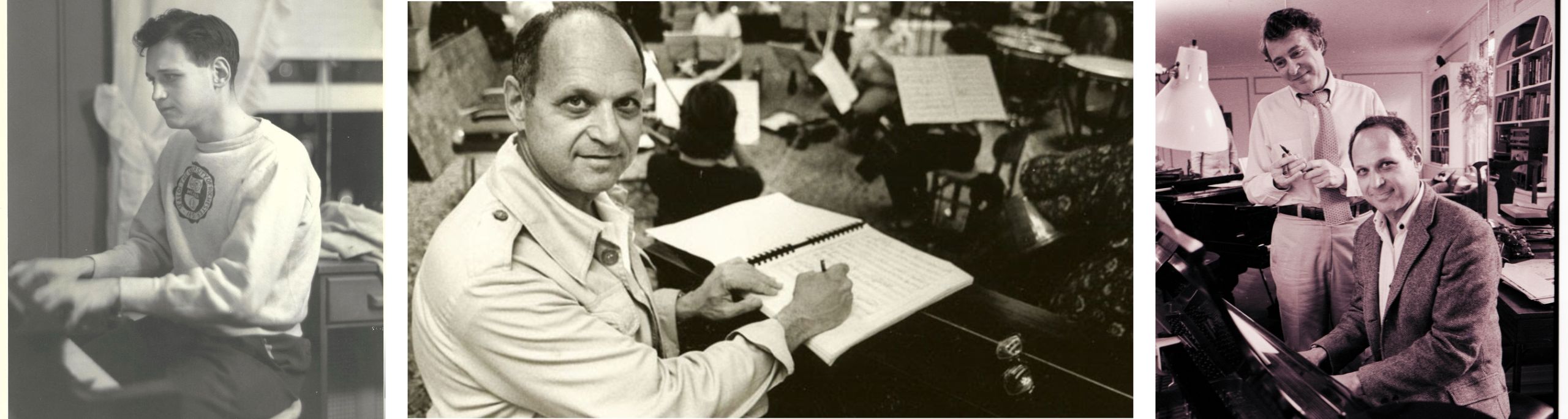
Few composers have woven themselves so completely into the fabric of American popular culture as Charles Strouse. Born in New York City on June 7, 1928, and trained at the Eastman School of Music under Aaron Copland, Nadia Boulanger, and David Diamond, Strouse arrived on Broadway in 1960 with the exuberance of a composer who had mastered the classics and loved popular music in equal measure. He had spent his formative summers writing songs at the Green Mansions Theatre in Warrensburg, New York, absorbing the rhythms of American entertainment from the ground up. Over the next six decades he wrote music for Broadway stages, Hollywood film sets, and television living rooms, earning a place among the most performed composers of the twentieth century.
What separated Strouse from the crowd was a composer's rarest quality: the ability to write a melody so perfectly fitted to its moment that audiences left the theater humming something they felt certain they had always known. Whether writing the brassy swagger of a show built around a rock-and-roll craze, the warm swing of a Harlem street chorus, or the quiet swell of a single piano chord announcing a new day, Strouse understood a great song does not decorate a story. A great song tells it. By the time of his death in 2025, his catalog encompassed more than one thousand individual compositions, from Broadway standards to classical concert works, from film scores to opera, touching virtually every corner of American musical life.
The Broadway Years: A Composer Who Defined an Era
The debut was dazzling. In 1960, Bye Bye Birdie, written with lyricist Lee Adams and directed by Gower Champion, opened at the Martin Beck Theatre to unanimous acclaim. Starring Dick Van Dyke as Conrad Birdie's fast-talking manager, Chita Rivera, and Paul Lynde, the show ran for 607 performances and won Strouse and Adams the Tony Award for Best Musical Score, launching both men into the front ranks of Broadway composers. Songs like Put on a Happy Face and A Lot of Livin' to Do became immediate standards, recorded hundreds of times by vocalists ranging from Frank Sinatra to Tony Bennett. (The original 1960 piano-conductor score, bearing notations from Strouse's own archive, survives in the estate collection, one of the many manuscript materials offered through this auction.) During the two years Birdie spent making the rounds of backers' auditions, Strouse worked as an assistant to Frank Loesser, the titan behind Guys and Dolls, an apprenticeship that sharpened both his craft and his understanding of the Broadway machinery he was about to enter.


Two years later, All American (book by Mel Brooks, starring Ray Bolger) introduced the enduring standard Once Upon a Time, recorded by countless artists across generations. In 1964 came Golden Boy, built for Sammy Davis Jr. and running 568 performances at the Majestic Theatre. The holograph manuscripts from this production, including a compositional draft inscribed '(Jopas Opening),' offer scholars an insightful look into Strouse's working methodology while writing music for the stage. Two years on, It's a Bird, It's a Plane, It's Superman (1966, lyrics by Lee Adams, directed by Hal Prince) brought the comic-book hero to Broadway, introducing the song You've Got Possibilities, sung in the original production by a then little-known Linda Lavin.


The award-winning partnership with Lee Adams continued in 1970 with Applause, starring Lauren Bacall in a role tailored for pure star presence. The production ran 896 performances and brought Strouse his second Tony Award. In 1977, collaborating with lyricist Martin Charnin, he adapted Harold Gray's syndicated comic strip for the stage. The result was Annie, which opened at the Alvin Theatre on April 21, 1977, starring Andrea McArdle in the title role, Dorothy Loudon as the formidable Miss Hannigan, and Reid Shelton as Daddy Warbucks. The show ran for 2,377 performances and won seven Tony Awards including Best Musical Score. The song Tomorrow, sung by a red-haired orphan with unshakeable optimism, entered the national consciousness and has never left.


For the next three decades, Strouse remained one of Broadway's most productive and ambitious voices, turning out show after show with the discipline of a craftsman and the appetite of someone who had never stopped loving the work. Among his most personal projects was the collaboration with lyricist Stephen Schwartz on Rags (1986), an examination of Jewish immigrant life in early twentieth-century America widely acknowledged by scholars as among his greatest artistic achievements. Though its original Broadway run at the Mark Hellinger Theatre was brief, the show has become a staple of regional and amateur theater worldwide, its score continuing to find new audiences with each successive revival. Other productions during this period, including Dance a Little Closer (1983, lyrics by Alan Jay Lerner), Charlie and Algernon (1980, lyrics by David Rogers), Mayor (1985, an adaptation of Mayor Edward I. Koch's memoirs for which Strouse wrote both music and lyrics), and Nick and Nora (1991, lyrics by Richard Maltby Jr., book by Arthur Laurents), each earned him Tony Award nominations, adding chapter after chapter to a body of work that refused to be defined by any single triumph, however enduring.
For all the honors, Strouse never lost the anxiety of opening night. During the Philadelphia tryout of Bye Bye Birdie in March 1960, he, lyricist Lee Adams, and book writer Michael Stewart paced the lobby as the curtain rose. When the curtain came down to what Strouse considered minimal applause, he could bear it no longer. He opened a broom closet under the lobby's grand staircase to hide, and heard a growl from inside. Stewart was already there. They had both arrived at the same solution.
Film, Television, and the World Beyond Broadway
Charles Strouse's reach extended well beyond the stage door. His film scores for Bonnie and Clyde (1967) and The Night They Raided Minsky's (1968) showed a cinematic sensibility equal to his theatrical instincts, and his animated score for All Dogs Go to Heaven (1989) introduced his music to a new generation of younger audiences. In 1971, a single television theme carried his name into every American home: Those Were the Days, the opening theme for Norman Lear's All in the Family, which premiered on CBS on January 12, 1971, with lyrics by Lee Adams, became one of the most recognizable compositions in broadcast history, one of the few television theme songs to achieve genuine American songbook status. (It is Strouse's own piano playing heard on the soundtrack as Carroll O'Connor and Jean Stapleton sing at the keyboard.) A set of six player piano rolls from the estate collection, featuring Strouse compositions including the All in the Family theme, stands among the more unusual artifacts in the present auction, a distinctly American object bridging popular entertainment and living-room culture.


The range of his songs across genres remains astonishing. In 1958, Born Too Late, written with Fred Tobias for the Poni-Tails, reached number one on the Billboard charts. In 1998, his It's the Hard-Knock Life was sampled by Jay-Z for the quadruple-platinum Grammy-winning anthem Hard Knock Life (Ghetto Anthem), which won the Grammy Award for Best Rap Album of the Year. The distance between those two moments, from 1958 girl-group pop to 1998 hip-hop, measures the arc of a composer whose melodies belonged to no single category, from the Broadway stage to the Billboard charts to fans of hip-hop music four decades later.
Concert Works, Opera, and the Life of a Complete Musician
Strouse never set aside the formal training Nadia Boulanger and Aaron Copland had given him. His orchestral output includes Concerto America, which received its world premiere at the Boston Pops in 2002 with pianist Jeffrey Biegel and conductor Keith Lockhart. His opera Nightingale (1982), described by Strouse himself as a children's opera and based on the Hans Christian Andersen fairy tale, opened at the Lyric Hammersmith in London on December 18, 1982, starring a then little-known Sarah Brightman in the title role. The production's success introduced Strouse to West End audiences and, in a footnote worth savoring, it was a rave review of Brightman's performance in Nightingale that first brought Andrew Lloyd Webber to her attention, setting in motion one of the most celebrated partnerships in West End history. Strouse, as was his custom, had already moved on to the next project.
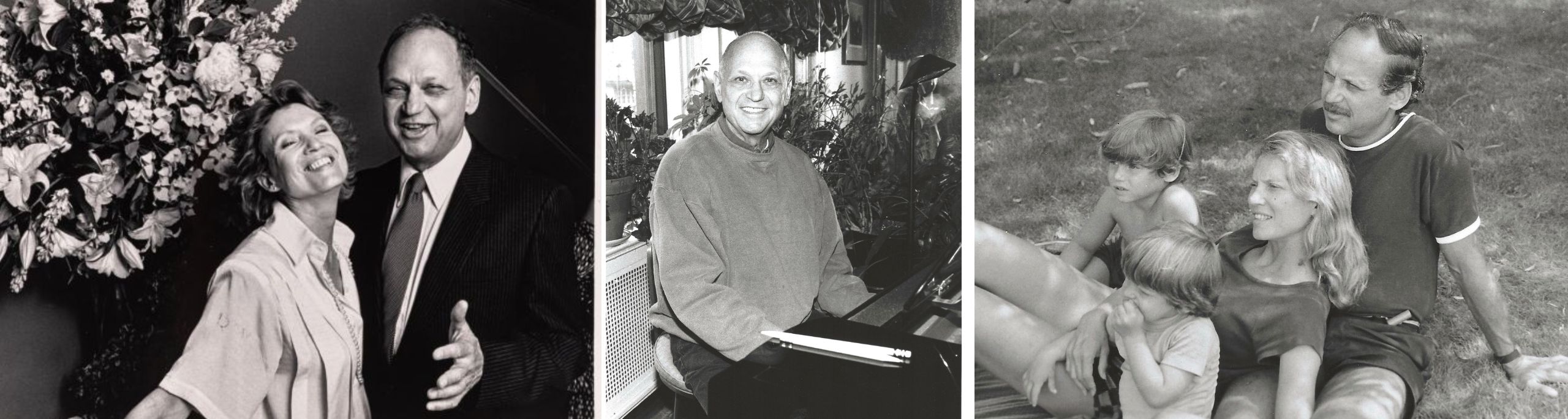
In 1962, Strouse married Barbara Siman, a dancer, director, and choreographer who had trained under George Balanchine and performed in the original Broadway production of My Fair Lady. She became his most trusted collaborator and steadfast creative partner, directing and choreographing productions of Mayor, By Strouse, and the Buxton Opera production of Nightingale, among others. They were married 61 years, until her death on February 16, 2023. In 1979, Strouse founded the ASCAP Musical Theatre Workshop in New York, an institution he led for fifteen years, nurturing the next generation of composers and lyricists. In 1999, ASCAP presented him with the Richard Rodgers Award. Both the Songwriters Hall of Fame and the Theater Hall of Fame count him among their members. Five Towns College and St. John's University each conferred honorary doctorates in recognition of his contributions to American music, honors reflecting the singular breadth of a career spanning concert hall, Broadway house, recording studio, and television studio.
His formal honors extend across every medium he touched. Three Tony Awards, for Bye Bye Birdie, Applause, and Annie, place him among the most decorated composers in Broadway history. A Grammy Award for the Annie original cast album confirmed his hold on popular audiences, while an Emmy Award, shared with Lee Adams for the 1995 television production of Bye Bye Birdie starring Jason Alexander, extended his recognition to the medium that had already made him a household name with All in the Family more than two decades earlier.


A Legacy Measured in Songs
Charles Strouse composed music for more than half a century, and it belongs to the world now. Three Tony Awards, multiple Grammys, and an Emmy mark the formal honors; the informal ones are harder to count. His songs have been performed by Frank Sinatra and Jay-Z, recorded in London and Tokyo, staged in Sydney and São Paulo, sung by children in school auditoriums on six continents, and aired on prime-time television in America for nearly a decade. The West End claimed him. Hip-hop sampled him. The Boston Pops performed with him. Regional theaters from Maine to California keep his shows in permanent rotation. What began at a piano in a New York apartment traveled further, and lasted longer, than even he might have dared to hope.
The materials to be auctioned on March 18 represent more than the contents of a distinguished composer's apartment and storied career. This collection is the evidence of an American life devoted to music: manuscripts in his hand, correspondence with the central figures of Broadway, personal memorabilia from productions that shaped the culture, and an 1897 Steinway Grand that bore witness to all of it. For collectors, scholars, and those who love the American musical theater, the collection of Charles Strouse offers something rare: a direct connection to the creative intelligence behind some of the most enduring songs of the twentieth century.
Doyle would like to thank Brian Christopher Cummings, USPAP / Historian, The Estate of Charles Strouse & Barbara Siman, for this biographical essay.
Auction Wednesday, March 18, 2026 at 10am
Exhibition March 14 - 16